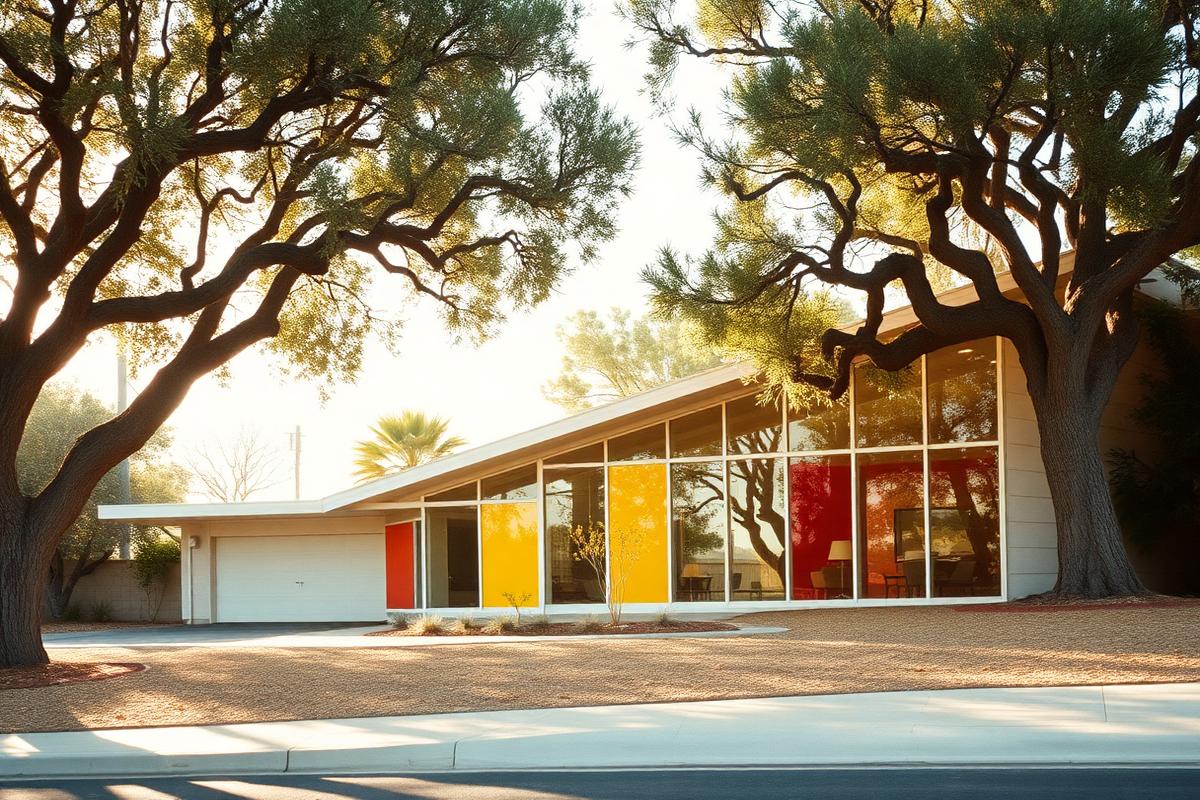
The commission was to prove that ordinary industrial parts — off-the-shelf steel frame, factory sash, colored panels — could make a house a family would actually love. The frame was erected by a small crew in about a day and a half.
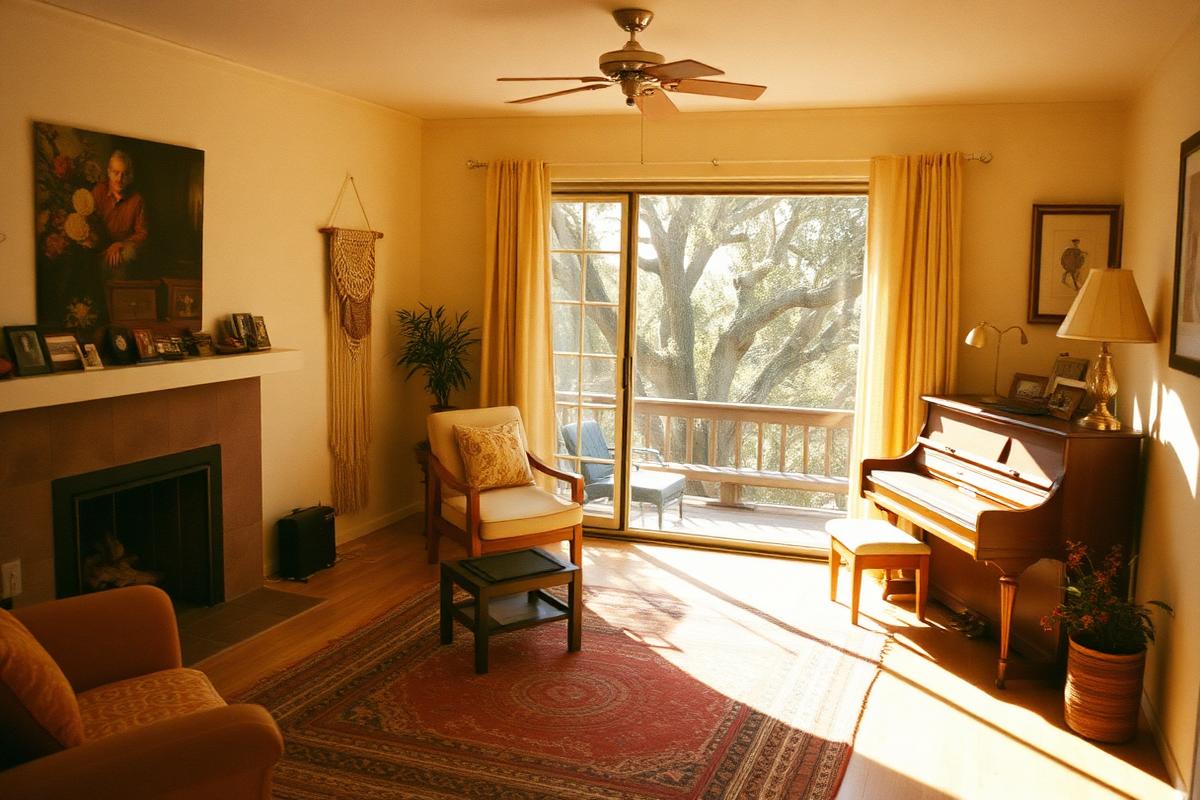
What makes it a home rather than a demonstration is the contents: shells, kites, folk toys, textiles, thousands of objects arranged and rearranged for four decades. Ray called it "functioning decoration."
They lived there from Christmas Eve 1949 until the end of both their lives, and left instructions that the interior be preserved exactly as it stood.
Memories attached to this place
“The eucalyptus row was there first. They moved the house sideways rather than cut them.”
“Every object in that living room has been photographed a thousand times, and none of it was staged.”
“As a kid I thought it was a factory. Then I saw the kites hanging in the window.”
Timeline
- 1945Case Study House Program commissions the design.
- 1949Frame erected; the couple moves in on Christmas Eve.
- 1950sInterior becomes a lifelong, changing collection.
- 2006Designated a National Historic Landmark.
A house made of standard parts became irreplaceable because of what two people put inside it.