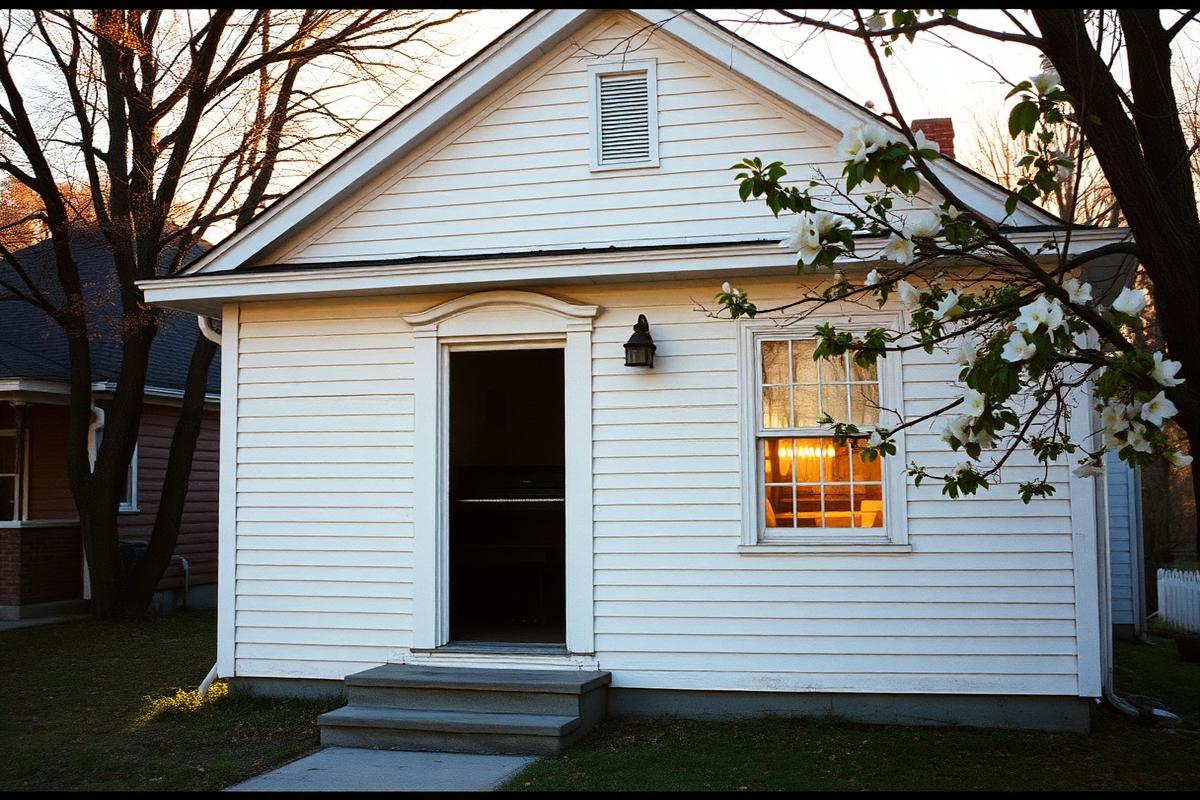
Eunice Waymon was born in a 660-square-foot clapboard house on East Livingston Street in 1933, the sixth of eight children. She was playing hymns by ear at three on a piano in the front room.
Local residents — Black and white, in a segregated town — raised a fund to pay for classical lessons. That fund is the reason a child from a three-room house auditioned at Juilliard.
The house fell derelict and was days from demolition in 2017 when four artists bought it outright. It is being restored as a landmark rather than a teardown.
Memories attached to this place
“The whole town chipped in for those lessons. People here still say it like it was nothing.”
“You could hear the piano from the road on a warm evening with the door open.”
“It was three rooms. Eight children. And the most important instrument in North Carolina.”
Timeline
- 1933Born in the house on East Livingston Street.
- 1936Begins playing the family piano by ear at age three.
- 1940sThe community fund pays for classical lessons.
- 2017Rescued from demolition and designated a National Treasure.
A house worth $30,000 on paper was worth saving for exactly one reason: what happened inside it.